
MCG delivers precision servomotors engineered for industrial automation, robotics, and motion control. Their compact designs combine torque, speed, and reliability, enabling seamless integration into complex systems. MCG’s expertise ensures consistent performance across diverse applicationsThey enable precision
What Are Servomotors?
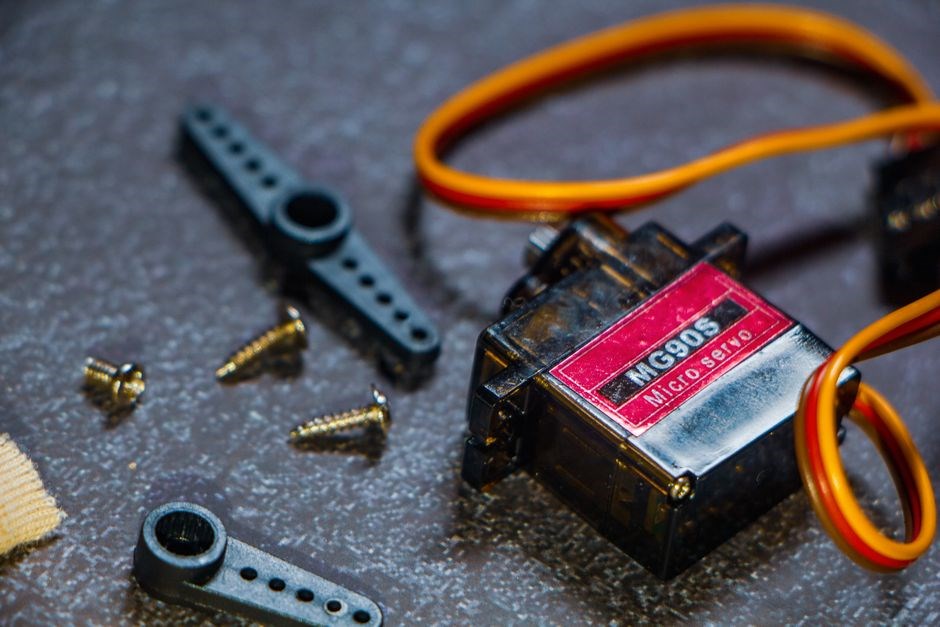
Servomotors are electromechanical units that transform electrical signals into precise mechanical motion. They combine a motor, a feedback sensor, and a controller into a closed‑loop system. The motor produces torque; the sensor measures position, speed, or torque; the controller processes the error signal and adjusts the motor’s input to achieve accurate positioning and smooth acceleration. In industrial applications, servomotors deliver high resolution, rapid response, and repeatability, making them essential for CNC machines, robotic arms, and automated assembly lines. MCG’s PDF catalog provides detailed specifications for each model, including rated torque, speed range, voltage, and available feedback types such as optical, magnetic, or encoder. The PDF format allows engineers to download, view, and print data sheets, compare models side‑by‑side, and reference technical drawings during design and procurement. The closed‑loop architecture also offers fault tolerance: the controller can detect stalls or overloads and shut down the motor to protect the system. By integrating a servomotor into a control loop, manufacturers achieve precise motion control, reduce wear, improve energy efficiency, and lower operating costs while enhancing product quality.
Engineers use the PDF catalog to verify compliance with ISO 9001 and IEC 60204, ensuring safety and reliability. Detailed drawings and torque curves support CAD simulation, enabling early validation and cost savings. A quick‑reference table summarizes key parameters, simplifying model comparison and procurement. Its searchable index speeds up product selection during quick review.
Why Choose MCG?
MCG’s servomotors stand out for their unmatched precision, durability, and comprehensive support ecosystem. Each unit is engineered with high‑grade materials, tight manufacturing tolerances, and rigorous testing protocols that guarantee consistent performance under extreme temperatures, vibration, and electrical noise. The PDF catalog showcases a full range of models—from compact 50 Nm units for small‑scale robotics to heavy‑duty 500 Nm drives for industrial automation—each with detailed torque curves, thermal maps, and integrated safety features such as over‑current protection and fault‑tolerant firmware. MCG’s design philosophy emphasizes modularity: the same core motor can be paired with optical, magnetic, or encoder feedback, allowing customers to tailor resolution and speed to specific application needs without redesigning the entire system. Moreover, MCG offers a robust after‑sales network, including 24/7 technical support, on‑site calibration services, and a fast‑track spare‑part supply chain that minimizes downtime. The PDF catalog is searchable, enabling engineers to quickly locate specifications, compare models, and download datasheets in multiple languages. By choosing MCG, you gain a partner that delivers not only high‑quality hardware but also the documentation, support, and innovation needed to accelerate product development and maintain long‑term operational excellence.

In addition, MCG invests heavily in research and development, collaborating with universities and industry consortia to push motor efficiency and control algorithms. Their proprietary low‑loss windings and advanced thermal management reduce energy consumption by up to 15% compared to market averages, translating into significant cost savings over the motor’s lifespan. MCG’s commitment to sustainability is evident in recyclable materials and adherence to RoHS and REACH regulations, ensuring global environmental compliance. Customers also benefit from training programs and detailed integration guidesand firmware updates immediately!

Navigating the MCG Servomotor Catalog
Exploring the PDF catalog, users find a clear layout: a front‑matter index, model categories, and a search bar for quick access. Each section contains torque curves, speed ratings, and mounting options, enabling precise selection for specific automation tasks. The layout is user‑friendly. Navigation saves time fast.
Catalog Structure and Sections
The MCG servomotor PDF catalog is organized into logical sections that guide the reader from general information to detailed product data. An executive summary outlines the company’s mission, core technologies, and a quick reference table of key product families. A table of contents provides hyperlinks to each major chapter, allowing instant navigation to the desired section. The catalog splits into three primary blocks: the “Product Overview” block lists all available models, grouped by application type such as industrial automation, robotics, and motion control. Each model entry includes a high‑resolution image, a short description, and a quick‑look table of essential specifications (torque, speed, voltage, and weight). The next block, “Technical Specifications,” dives deeper, offering full datasheets, electrical diagrams, mechanical drawings, and compliance certifications. These pages are formatted for easy printing and include a searchable index for quick lookup of parameters. The final block, “Ordering & Support,” contains detailed instructions on how to place orders, warranty information, and links to online resources such as firmware updates, user manuals, and troubleshooting guides. Throughout the PDF, a consistent header and footer provide page numbers, the catalog version, and contact details. The layout is designed for both desktop and mobile viewing, ensuring that users can access critical information on the go. In addition, the catalog includes a “Quick‑Start Guide” section that walks new customers through mounting, wiring, and calibration steps, complete with safety warnings and best‑practice tips. Engineers and can locate the exact model that meets procurement requirements! This catalog empowers precise selection for automation and control.Today.
Key Features Highlighted
MCG’s PDF catalog spotlights standout attributes that set its servomotors apart. First, it showcases precision engineering with tight tolerances delivering sub‑micron positioning accuracy. Second, it highlights high torque‑to-weight ratios, enabling compact designs for robotics, CNC, and automotive use. Third, it presents intuitive control interfaces supporting CANopen, EtherCAT, and Modbus‑TCP for seamless PLC integration. Fourth, it details extended service life, backed by a 10‑year warranty and MTBF over 200,000 hours. Fifth, it displays environmental resilience with IP65 sealing, –40 °C to +85 °C range, and vibration ratings meeting aerospace standards. Sixth, it emphasizes robust thermal management, featuring advanced heat‑sink geometries that keep temperatures below 80 °C under continuous duty. Seventh, it showcases energy‑efficient drive architecture, where regenerative braking and low‑loss magnetic materials cut power consumption by up to 25 %. Eighth, it highlights modular firmware updates that can be applied remotely, keeping systems current without downtime. Ninth, it offers wide voltage compatibility, with models running on 24 V, 48 V, 120 V, and 240 V DC supplies. Tenth, it provides comprehensive support ecosystem—datasheets, installation guides, and a dedicated hotline for rapid assistance. Additionally, the catalog presents a dedicated section on compliance certifications, detailing ISO 9001, ISO 14001, and industry‑specific standards that affirm quality and environmental stewardship. Users can also access a real‑time performance dashboard, enabling predictive maintenance and reducing unplanned downtime across production lines. The catalog’s user‑friendly layout ensures quick reference engineers and procurement teams alike!!

PDF Format: Benefits and Constraints

PDF catalogs provide universal accessibility, reliable offline viewing. They embed fonts, support annotations, and are easily shareable. Yet they can be large, lack native search in some readers, and editing requires specialized software, limiting rapid updates.!!!!!
Accessibility and Compatibility

PDF catalogs are inherently cross‑platform, rendering consistently on Windows, macOS, Linux, and mobile operating systems. The format preserves layout, typography, and embedded graphics, ensuring that technical drawings and schematics appear exactly as intended regardless of the viewer. Accessibility features such as tagged PDFs, alt text for images, and selectable text enable screen readers to interpret the content, which is essential for compliance with WCAG guidelines. Compatibility is further enhanced by the widespread availability of free PDF readers—Adobe Acrobat Reader, Foxit, SumatraPDF, and browser‑integrated viewers—meaning users need not install specialized software. PDFs can be opened in most web browsers, allowing instant preview without additional downloads. The format also supports metadata, enabling search engines to index product names, part numbers, and specifications, improving discoverability. PDF/A compliance guarantees long‑term archival by embedding all fonts and color profiles. Security options such as password protection, watermarking, and digital signatures allow manufacturers to restrict editing, prevent unauthorized distribution, and verify authenticity. Embedding hyperlinks to external resources—such as online ordering portals, firmware updates, or technical support pages—provides an interactive bridge between static documentation and dynamic services. By leveraging these capabilities, MCG ensures that every stakeholder—from engineers to procurement teams—has reliable, accessible, and secure access to the full product suite. The PDF format also facilitates offline access, allowing field technicians to consult specifications without internet connectivity. Additionally, the ability to embed high‑resolution images and vector graphics ensures that fine details are preserved. Because the file is self‑contained, it can be stored in cloud repositories or distributed via USB drives. This approach streamlines training, reduces errors, and supports rapid deployment across global sites. Moreover, the standardized format simplifies compliance audits and documentation reviews.

Searchability and Indexing
PDF catalogs can be fully indexed by search engines and internal document management systems when properly tagged. By embedding metadata—such as title, author, subject, and keywords—each page becomes searchable for part numbers, specifications, and technical terms. Structured headings (H1–H6) and bullet lists allow crawlers to parse hierarchical information, improving discoverability. Optical character recognition (OCR) can be applied to scanned images, converting them into selectable text, which expands search coverage to legacy documents. Advanced indexing tools can create searchable PDFs that support phrase matching, wildcard queries, and Boolean operators, enabling engineers to locate exact torque ratings or encoder resolutions quickly. The PDF/A standard preserves all text and vector data, ensuring that even after compression or archival, the content remains searchable. Additionally, embedding hyperlinks to external resources—such as datasheets, firmware, and support forums—creates a networked knowledge base that can be traversed by both human users and automated bots. Searchable PDFs also support full‑text search within PDF viewers, allowing users to find specific parameters without opening each page. By leveraging these features, MCG’s catalog becomes a resource that highly quickly accelerates product selection, reduces lookup time, and enhances overall efficiency across design, procurement, and maintenance workflows.
PDFs support filtering, as author names, and document types, which prove invaluable when reviewing revisions or comparing legacy and current models. Integration with search platforms like Elasticsearch or SharePoint enhances retrieval of product data across large repositories. When PDFs reside in cloud storage, automatic indexing can trigger notifications for new versions, ensuring teams reference the most up‑to‑date specifications. Exporting search results to CSV or Excel allows analysts to compile comparative tables and share insights efficiently.

Downloading the Catalog
Access the official PDF via the MCG website or authorized distributors. Ensure you select the latest version, verify the file size, and confirm the integrity checksum. Once downloaded, store it in a secure location for future reference and compliance audits. Download now stay up. now
Official Source and Links
For the most accurate and up‑to‑date MCG servomotor catalog in PDF format, always refer to the manufacturer’s official website or authorized partner portals. The primary download link is hosted on the MCG “Products” section, where each product line has a dedicated page containing technical specifications, application notes, and the latest PDF catalog. To locate the correct file, navigate to the “Downloads” tab, then select “Servomotor Catalogs.” The PDF is typically named “MCG_Servomotor_Catalog_
Version Control and Updates
MCG’s PDF catalog follows a strict versioning scheme to ensure users always access the most current data. Each release is stamped with a unique identifier in the format “YYYY‑Vn” (e.g., 2024‑V3), where the year reflects the publication cycle and “Vn” denotes the incremental revision. The catalog’s metadata includes a comprehensive change log that enumerates all additions, deletions, and corrections, allowing engineers to verify that the document reflects the latest mechanical, electrical, and firmware specifications. When a new version is issued, the previous PDF is archived on the MCG website under the “Historical Downloads” section, preserving the file for compliance audits and legacy system support. Users can compare two releases side‑by‑side by downloading both PDFs and employing a PDF comparison tool; MCG also offers a built‑in “Version Diff” feature on the download page that highlights differences in a side‑by‑side view. To stay automatically informed, subscribers can opt into the MCG newsletter or RSS feed, which posts a brief summary of each new catalog release. Additionally, the catalog’s URL contains a query parameter (e.g., “?ver=2024‑V3”) that can be appended to the base link to force retrieval of the specified version, bypassing any cached copies. For integration into automated build pipelines, MCG provides an API endpoint that returns the latest catalog’s download URL and checksum, enabling continuous delivery systems to fetch the newest PDF without manual intervention. Finally, version control is tightly coupled with the product lifecycle: major revisions coincide with new product families, while minor updates address firmware tweaks or packaging changes. This disciplined approach guarantees that engineers, designers, and procurement teams base their decisions on the most accurate, legally compliant documentation available. Users are to verify checksum and compare revision history before finalizing procurement decisions.

Utilizing the Catalog for Product Selection
Use the PDF catalog to filter servomotors by torque, speed, and mounting style. The searchable index lets you locate specific models quickly. Cross‑reference datasheets for electrical specs, and consult the ordering guide for lead times and part numbers. Check the appendix for calibration steps and safety guidelines
Technical Specs and Data Sheets
MCG’s PDF catalog offers a comprehensive technical specifications section for each servomotor model. Each datasheet is structured to provide quick reference for key performance parameters, including rated torque, continuous torque, peak torque, speed range, stall current, and power consumption. The mechanical dimensions section lists shaft diameter, mounting flange size, and overall length, allowing designers to verify compatibility with existing assemblies. Electrical characteristics such as input voltage range, phase type, and wiring diagram are also included, ensuring seamless integration into control systems. Thermal data, including maximum operating temperature and cooling methods, helps in selecting motors for harsh environments. The datasheets further provide performance curves, such as torque versus speed and efficiency plots, which aid in optimizing system dynamics. For safety compliance, each sheet references relevant standards (e.g., IEC, UL) and includes a brief description of protection levels. The PDF format allows users to zoom, search, and bookmark specific sections, making it convenient for engineers to compare models side‑by‑side. Additionally, the catalog includes a quick‑reference table that aggregates critical specs across the entire product line, facilitating rapid decision‑making during the design phase. All datasheets are downloadable as separate PDF files, enabling offline review and integration into engineering documentation workflows. Use catalog to compare models and streamline selection no quick for performance.
Ordering and Support
Customers can place orders directly through the MCG website or via authorized distributors listed in the PDF catalog. Each product page contains a clear “Order Now” button that links to the company’s online ordering system, where users can enter part numbers, quantities, and shipping details. For bulk purchases, MCG offers a dedicated bulk‑order portal that provides volume discounts, custom packaging options, and priority shipping. The catalog also includes a downloadable order form in PDF format, which can be printed, filled out manually, and mailed or faxed to the sales office. MCG’s customer support team is available 24/7 to answer technical questions, provide installation guidance, and troubleshoot performance issues. Support resources are accessible through the “Support” section of the website, offering firmware updates, wiring diagrams, and troubleshooting guides. Technical assistance can be requested via email, phone, or live chat, and response times typically fall within one business day. For warranty claims, the PDF catalog lists the warranty terms for each motor model, including coverage periods and procedures for submitting claims. MCG also partners with local service centers that provide on‑site maintenance and calibration services. All support documentation is available in PDF format for offline reference, and the catalog’s search feature allows users to locate specific support articles quickly. By combining streamlined ordering processes with comprehensive support resources, MCG ensures that customers receive the right motor, delivered on time reliable technical assistance.