
Reactivity Series: An Overview

The reactivity series organizes elements by their tendency to undergo chemical reactions․ Observations of reactions with water and acids help establish this order, as detailed in provided resources․
Elements higher in the series readily displace those below, a principle demonstrated in displacement reactions and metal extraction processes like the thermite reaction․
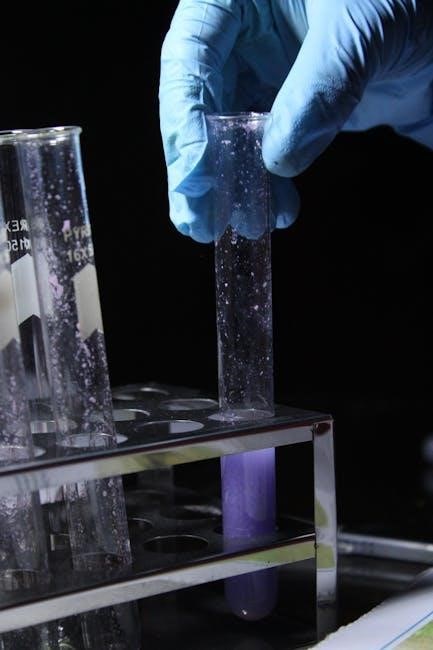
Chemical reactivity describes how readily a substance participates in chemical reactions․ This inherent property dictates whether an element will easily combine with others, or remain relatively stable․ Understanding reactivity is fundamental to predicting reaction outcomes and controlling chemical processes․
The reactivity of metals and non-metals is often assessed by observing their interactions with common substances like water and dilute acids․ For instance, metals like lithium react vigorously, while gold exhibits almost no reaction, as highlighted in available resources․ This differential reactivity forms the basis of the reactivity series․
Crucially, elements cannot displace those positioned above them in the series, indicating a lower tendency to participate in reactions․ This principle governs displacement reactions, where a more reactive element replaces a less reactive one in a compound․ The reactivity series isn’t merely a list; it’s a predictive tool for chemical behavior․
Understanding the Reactivity Series
The reactivity series is a hierarchical arrangement of elements, showcasing their relative ease of undergoing chemical transformations․ Elements are listed from highest to lowest reactivity, providing a clear visual representation of their tendencies to gain or lose electrons during reactions․

A key principle is that an element will not displace another situated above it in the series․ This means a more reactive element is required to displace a less reactive one from its compound․ This concept is central to understanding displacement reactions and predicting their feasibility․
Observations of reactions with water, acids, and steam are instrumental in establishing the series’ order․ For example, calcium reacts quickly, while silver barely reacts, informing their respective positions․ Furthermore, the inclusion of carbon and hydrogen aids in understanding metal extraction processes, as they can displace metals from their oxides․
Metals in the Reactivity Series
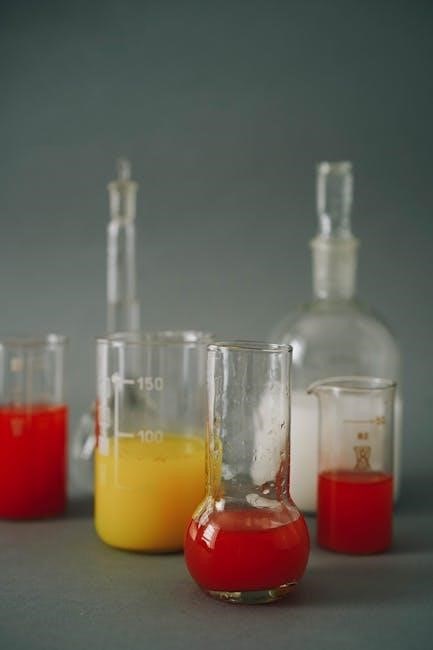
Metals exhibit varying reactivities; lithium, potassium, and barium are highly reactive, while copper, silver, and gold are considerably less so, influencing their chemical behavior․
Highly Reactive Metals: Lithium, Potassium, Barium
Lithium (Li), Potassium (K), and Barium (Ba) occupy the top positions within the reactivity series, signifying their exceptional eagerness to participate in chemical reactions․ These alkali and alkaline earth metals demonstrate a pronounced tendency to lose electrons, forming positive ions with relative ease․
This high reactivity stems from their electronic configurations, possessing only one or two valence electrons, respectively․ Consequently, they react vigorously – sometimes explosively – with water, generating hydrogen gas and forming hydroxides․ Their reactions with dilute acids are similarly rapid and exothermic, releasing hydrogen gas and forming corresponding salts․
Due to their reactivity, these metals are never found in nature in their elemental form; they always exist combined with other elements․ The provided chart clearly indicates that elements cannot replace those positioned above them in the series, highlighting the inherent reactivity differences․ Handling these metals requires careful consideration and appropriate safety precautions due to their potent chemical properties․
Moderately Reactive Metals: Calcium, Magnesium, Zinc, Iron
Calcium (Ca), Magnesium (Mg), Zinc (Zn), and Iron (Fe) exhibit moderate reactivity, falling in the middle ground of the reactivity series․ While not as violently reactive as Lithium, Potassium, or Barium, these metals still participate in noticeable chemical reactions, albeit at varying rates․
Observations reveal Calcium reacts very quickly with water, while Magnesium reacts quickly․ Zinc and Iron react more slowly, with Copper reacting very slowly and Silver barely reacting at all․ These reaction speeds are crucial for understanding their placement in the series․
It’s important to note that Aluminum, though often considered alongside these, can be tricky to place accurately due to its protective oxide layer․ Removing this layer provides more reliable observations․ These metals are frequently used in practical applications, leveraging their moderate reactivity for processes like galvanization (Zinc) and steel production (Iron)․ They can displace metals lower in the series from their compounds․
Less Reactive Metals: Copper, Silver, Gold
Copper (Cu), Silver (Ag), and Gold (Au) represent the lower end of the reactivity series, characterized by their resistance to chemical reactions․ These metals are often described as noble metals due to their stability and reluctance to form compounds․
Experimental observations confirm this low reactivity; Copper reacts very slowly with acids, while Silver barely reacts at all․ Gold is notably inert, exhibiting virtually no reaction with common reagents like water or dilute acids under normal conditions․ This inherent stability is why they are found in their elemental form in nature․
Their lack of reactivity makes them valuable for applications requiring corrosion resistance, such as electrical wiring (Copper), jewelry (Silver and Gold), and coinage․ They will not displace other metals from their compounds, as they are unable to readily donate electrons․ This stability is a defining characteristic of these less reactive metals;

Non-Metals and Reactivity
Non-metals, like halogens (Fluorine, Chlorine, Bromine, Iodine), also exhibit reactivity trends․ Fluorine is the most reactive, decreasing down the group, influencing displacement potential․
Halogens: Fluorine, Chlorine, Bromine, Iodine
Halogens – Fluorine (F), Chlorine (Cl), Bromine (Br), and Iodine (I) – represent a highly reactive group of non-metals․ Their reactivity stems from their need to gain just one electron to achieve a stable electron configuration․ This makes them potent oxidizing agents, readily participating in reactions where they accept electrons from other substances․
The reactivity dramatically decreases as you move down the group․ Fluorine is the most reactive halogen, exhibiting a strong tendency to form bonds․ Chlorine is also highly reactive, followed by Bromine, which is noticeably less vigorous in its reactions․ Iodine is the least reactive of the common halogens, requiring more energy to initiate reactions․
This trend is linked to factors like atomic size and electronegativity․ Larger atoms, like Iodine, have their valence electrons further from the nucleus, reducing their attraction for electrons․ Consequently, they are less effective at attracting electrons from other elements, resulting in lower reactivity․ Understanding halogen reactivity is crucial in predicting and controlling various chemical processes․
Reactivity Trends Among Non-Metals
Non-metal reactivity generally increases as you move from left to right across a period and decreases as you descend a group in the periodic table․ This trend is primarily governed by electronegativity – the ability of an atom to attract electrons in a chemical bond․ Higher electronegativity correlates with greater reactivity․
Within the halogen group, as previously discussed, fluorine exhibits the highest reactivity due to its strong electron-attracting power․ Conversely, iodine is the least reactive․ Oxygen and sulfur also demonstrate this trend; oxygen is far more reactive than sulfur․
The reactivity of non-metals is often demonstrated through their ability to form compounds with metals․ More reactive non-metals readily displace less reactive ones from their compounds․ This displacement is a direct consequence of their differing affinities for electrons․ Understanding these trends allows for prediction of reaction outcomes and the relative stability of formed compounds․
Reactions and the Reactivity Series
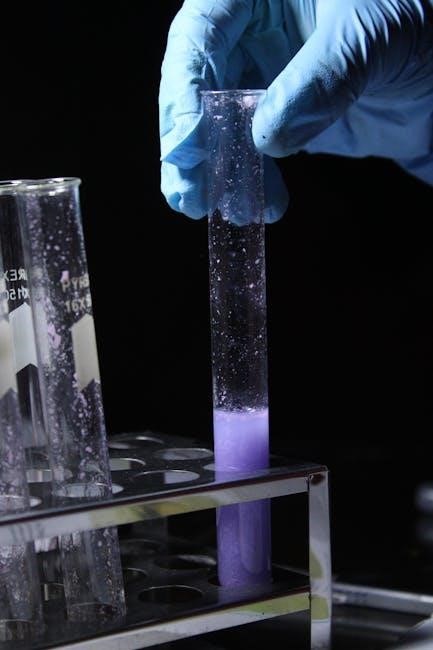
The reactivity series predicts how elements react with water, dilute acids, and other compounds․ More reactive metals displace less reactive ones, driving these chemical transformations․
Reactions with Water
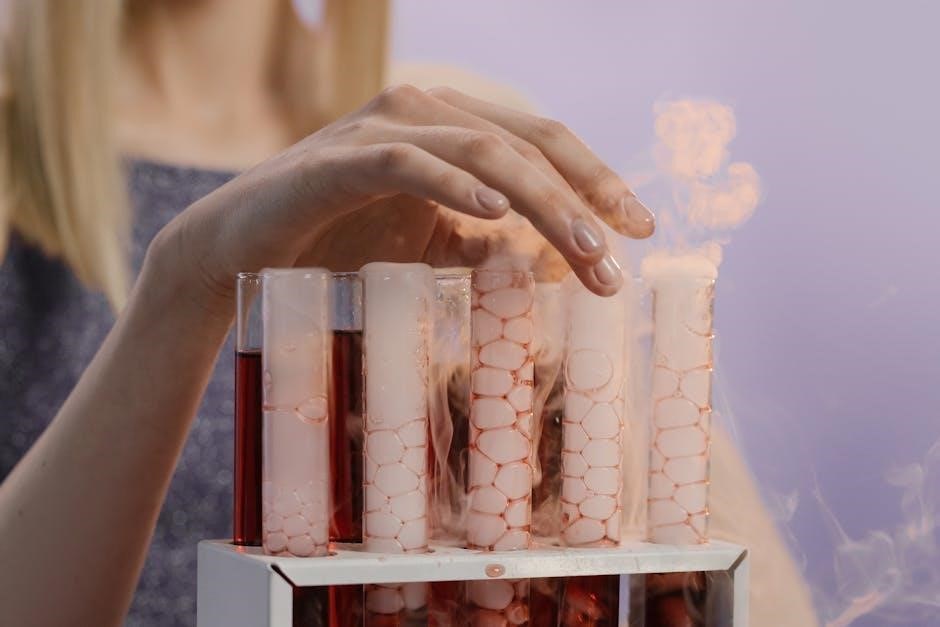
Reactions with water vary significantly across the reactivity series․ Highly reactive metals like Lithium, Potassium, and Barium react vigorously, sometimes explosively, with cold water, producing hydrogen gas and a metal hydroxide․
Calcium reacts quickly, while Magnesium requires steam for a noticeable reaction․ Zinc reacts more slowly, and Iron reacts even more slowly than Zinc․ Copper barely reacts with water, and Gold demonstrates no reaction at all under normal conditions․
It’s important to note that Aluminium’s reactivity can be masked by its protective oxide layer․ Removing this layer reveals a more reactive metal․ These observations, documented in available resources, are fundamental to establishing the reactivity series and predicting reaction outcomes․
Understanding these differing reaction rates provides insight into the relative tendencies of each metal to lose electrons and form positive ions in aqueous solutions․
Reactions with Dilute Acids
Reactions with dilute acids, similar to those with water, demonstrate a clear trend based on the reactivity series․ More reactive metals displace hydrogen from dilute acids, forming a metal salt and releasing hydrogen gas․
Calcium reacts very quickly with dilute acids, followed by Magnesium, which reacts quickly․ Zinc reacts at a slower pace, and Iron reacts even more slowly than Zinc․ Copper exhibits a very slow reaction, while Silver barely reacts at all․
Gold, being a very unreactive metal, does not react with dilute acids․ Again, Aluminium’s oxide layer can influence observed reactivity, requiring its removal for accurate assessment․ These reactions provide further evidence for the established order of reactivity․
The vigor of the reaction directly correlates with the metal’s tendency to donate electrons and form positive ions in solution, confirming its position in the series․
Displacement Reactions
Displacement reactions vividly illustrate the reactivity series in action․ A more reactive metal will displace a less reactive metal from its compound, showcasing a transfer of electrons and a change in ionic state․
This principle is fundamental to understanding how metals interact and compete for bonding․ If an element is higher in the reactivity series, it possesses a greater tendency to form positive ions and, therefore, can displace a lower-positioned metal from its salt;
For instance, if a more reactive metal is added to a solution containing ions of a less reactive metal, the more reactive metal will ‘take the place’ of the less reactive one․
The thermite reaction, involving aluminium and iron oxide, is a prime example, where aluminium’s higher reactivity displaces iron, producing molten iron and aluminium oxide․ This demonstrates a powerful and exothermic displacement․
Applications of the Reactivity Series
The reactivity series guides metal extraction using carbon or hydrogen, predicts reaction outcomes, and explains processes like the thermite reaction—a powerful displacement example․
Metal Extraction: Using Carbon and Hydrogen
Metal extraction relies heavily on the reactivity series, utilizing elements like carbon and hydrogen to remove metals from their ores․ This process exploits the principle that a more reactive element can displace a less reactive one from its compound․
Carbon, positioned higher in the series than many metals, is frequently employed in smelting․ Heating a metal oxide with carbon causes the carbon to steal the oxygen, leaving the pure metal behind․ This is a cost-effective method for extracting metals like iron․ Hydrogen, even more reactive than carbon, can also be used, though it’s generally more expensive․
The success of these extraction methods depends on the metal’s position in the reactivity series․ Metals very high in the series, like potassium, require more specialized (and costly) extraction techniques because they readily react with both carbon and hydrogen․ Understanding the reactivity series is, therefore, crucial for selecting the most efficient and economical extraction process for each metal․
Thermite Reaction: Aluminum and Iron Oxide
The thermite reaction provides a dramatic illustration of the reactivity series in action․ This highly exothermic reaction involves aluminum displacing iron from iron(III) oxide (rust), producing molten iron and aluminum oxide․ The chemical equation is 2Al + Fe2O3 → 2Fe + Al2O3․
Aluminum’s greater reactivity compared to iron is the driving force behind this process․ A significant amount of heat is initially required to initiate the reaction, but once started, it generates intense heat capable of melting the iron․ This makes thermite invaluable for welding, particularly in situations where portable equipment is needed․
The reaction demonstrates a fundamental principle: a more reactive metal will displace a less reactive metal from its oxide․ The resulting molten iron can then be used for joining metals, creating strong and durable bonds․ This showcases a practical application of understanding elemental reactivity․
Predicting Reaction Outcomes
The reactivity series is a powerful tool for predicting whether a chemical reaction will occur․ A key rule is that an element will not replace one above it in the series; the reaction simply won’t proceed․ This principle applies to displacement reactions, where a more reactive metal attempts to displace a less reactive metal from its compound․
For instance, if silver is placed in a solution of copper sulfate, no reaction will be observed because silver is below copper in the reactivity series․ Conversely, if zinc is introduced to the same solution, a displacement reaction will occur, forming zinc sulfate and metallic copper․
Understanding this hierarchy allows chemists to anticipate reaction products and determine the feasibility of various chemical processes․ It’s a cornerstone of predicting outcomes in metal extraction and other industrial applications, streamlining experimentation and optimizing results․